Showing posts with label Aristotle. Show all posts

Sunday, August 31, 2014

SOMETHING OF THE MARVELOUS


In all things of nature there is something of the marvelous.

Aristotle


Those who contemplate the beauty of the Earth
find reserves of strength that will endure as long as life lasts.

Rachel Carlson


Our ability to perceive quality in nature begins, as in art, with the pretty.  It expands
through successive stages of the beautiful to values as yet uncaptured by language.

Aldo Leopold


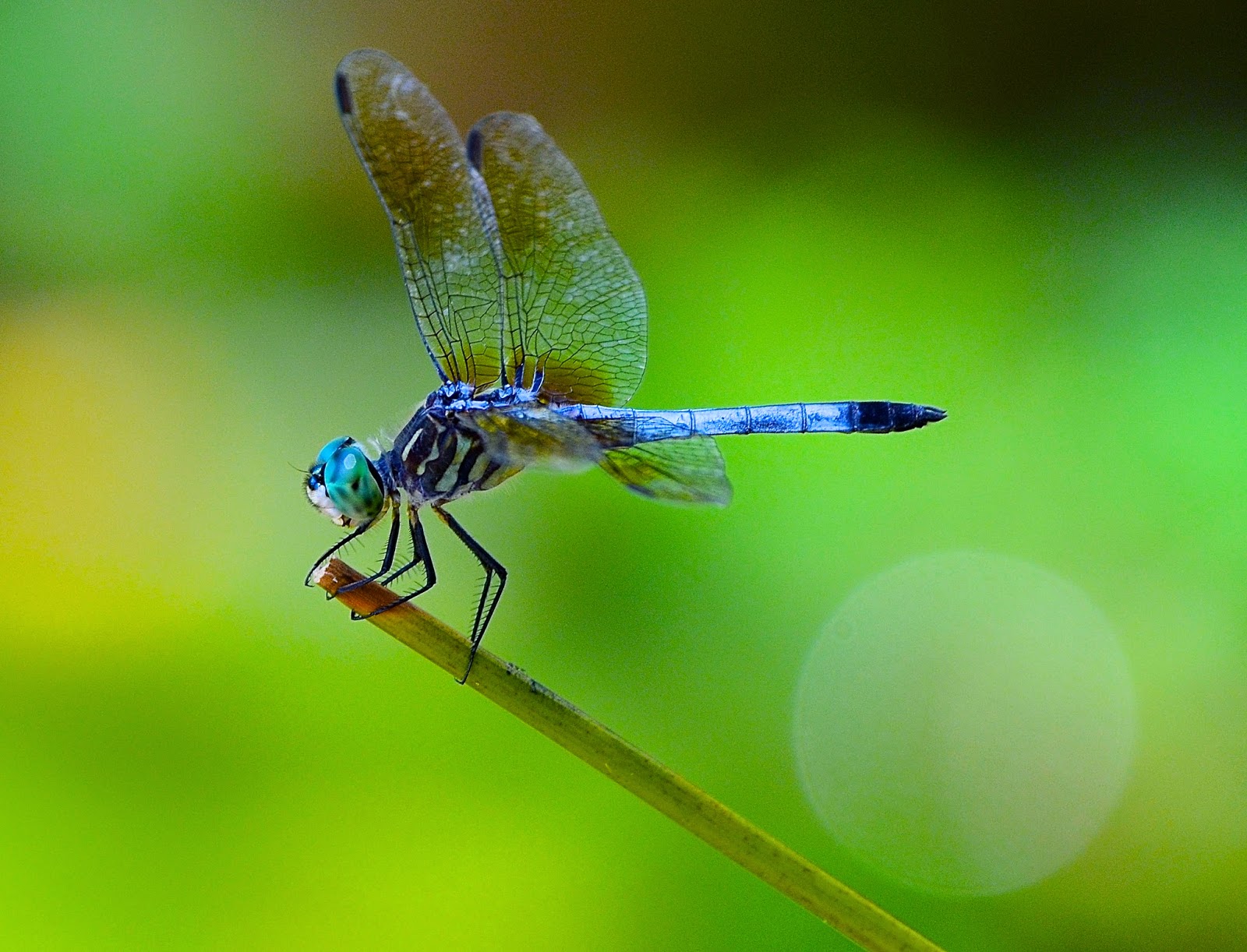
I think one of the most exciting things is this feeling of mystery,
feeling of awe, the feeling of looking at a little live thing and being amazed by it
 and how it has emerged through these hundreds of years of evolution and there it is perfect and why.

Jane Goodall


I would feel more optimistic about a bright future for man
if he spent less time proving that he can outwit Nature
and more time tasting her sweetness and respecting her seniority.

E.B. White


Our task must be to free ourselves . . .
by widening our circle of compassion to embrace
all living creatures and the whole of nature and its beauty.

Einstein


Happiness,
not in another place, but this place . . .
not for another hour, but this hour.

Walt Whitman


The poetry of the earth is never dead.

Keats


Sunday, February 24, 2013

THE BEGINNING, THE MIDDLE, AND THE END


Looking at my last post, Things That Slip Away in Time, I can see that I'm rather preoccupied these days with the subject of time — its nature, how it defines us at various stages of life, how the past shapes the future, how the past appears from the vantage point of the present.  Perhaps these are just idle thoughts on an idle Sunday afternoon, but they are the kind of thoughts that send me to the poetry of Billy Collins, for whom time seems to be a constant theme.

In particular, I have just reread the fine poem, Aristotle.  According to Collins, the inspiration for this poem arose upon reading Aristotle's Poetics, wherein the philosopher first articulated a principle that is now taken from granted by virtually everyone, specifically, that every literary work has three parts:  a beginning, a middle, and an ending.  As I read the poem, however, Collins is speaking not only of literary works, but also of life itself.  Indeed, what is life if not a beginning, where "almost anything can happen," followed by a middle, where "nothing is simple anymore," followed by an end, "where everything comes down to the destination we cannot help imagining . . . "? 


                                                    Aristotle


                                               by Billy Collins


                    This is the beginning.
                    Almost anything can happen.
                    This is where you find
                    the creation of light, a fish wriggling onto land,
                    the first word of Paradise Lost on an empty page.
                    Think of an egg, the letter A,
                    a woman ironing on a bare stage
                    as the heavy curtain rises.
                    This is the very beginning.
                    The first-person narrator introduces himself,
                    tells us about his lineage.
                    The mezzo-soprano stands in the wings.
                    Here the climbers are studying a map
                    or pulling on their long woolen socks.
                    This is early on, years before the Ark, dawn.
                    The profile of an animal is being smeared
                    on the wall of a cave,
                    and you have not yet learned to crawl.
                    This is the opening, the gambit,
                    a pawn moving forward an inch.
                    This is your first night with her,
                    your first night without her.
                    This is the first part
                    where the wheels begin to turn,
                    where the elevator begins its ascent,
                    before the doors lurch apart.

                    This is the middle.
                    Things have had time to get complicated,
                    messy, really.  Nothing is simple anymore.
                    Cities have sprouted up along the rivers
                    teeming with people at cross-purposes—
                    a million schemes, a million wild looks.
                    Disappointment unshoulders its knapsack
                    here and pitches his ragged tent.
                    This is the sticky part where the plot congeals,
                    where the action suddenly reverses
                    or swerves off in an outrageous direction.
                    Here the narrator devotes a long paragraph
                    to why Miriam does not want Edward's child.
                    Someone hides a letter under a pillow.
                    Here the aria rises to a pitch,
                    a song of betrayal, salted with revenge.
                    And the climbing party is stuck on a ledge
                    halfway up the mountain.
                    This is the bridge, the painful modulation.
                    This is the thick of things.
                    So much is crowded into the middle—
                    the guitars of Spain, piles of ripe avocados,
                    Russian uniforms, noisy parties,
                    lakeside kisses, arguments heard through a wall—
                    too much to name, too much to think about.

                    And this is the end,
                    the car running out of road,
                    the river losing its name in an ocean,
                    the long nose of the photographed horse
                    touching the white electronic line.
                    This is the colophon, the last elephant in the parade,
                    the empty wheelchair,
                    and pigeons floating down in the evening.
                    Here the stage is littered with bodies,
                    the narrator leads the characters to their cells,
                    and the climbers are in their graves.
                    It is me hitting the period
                    and you closing the book.
                    It is Sylvia Plath in the kitchen
                    and St. Clement with an anchor around his neck.
                    This is the final bit
                    thinning away to nothing.
                    This is the end, according to Aristotle,
                    what we have all been waiting for,
                    what everything comes down to,
                    the destination we cannot help imagining,
                    a streak of light in the sky,
                    a hat on a peg, and outside the cabin, falling leaves.


"Aristotle" from Picnic, Lightning (University of Pittsburgh Press, 1998), by Billy Collins.